Our first morning in Luang Prabang, we got up at 5 so we could participate in Tak Bat, or Morning Alms. It’s a daily tradition with Buddhist monks from the local monasteries that dates back to the 14th century. The monks leave their monasteries early in the morning and proceed through the streets, walking single file, with the oldest monks leading the way. A little before 5am, there are cushions, mats or stools lining the streets and providing a place for alms givers to sit or kneel.
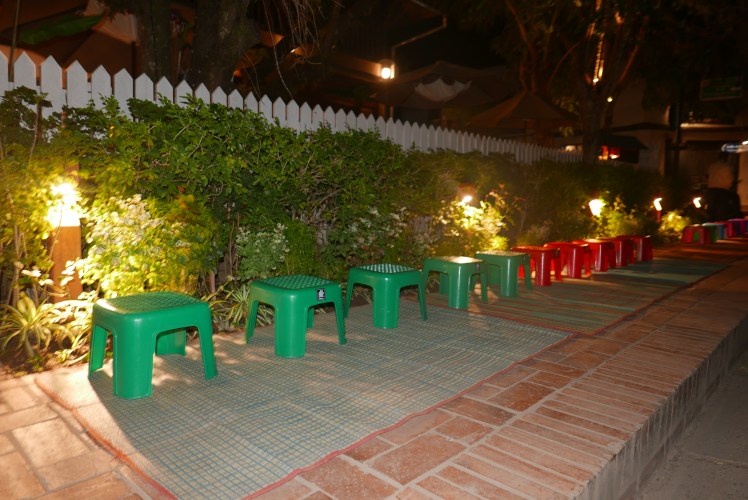
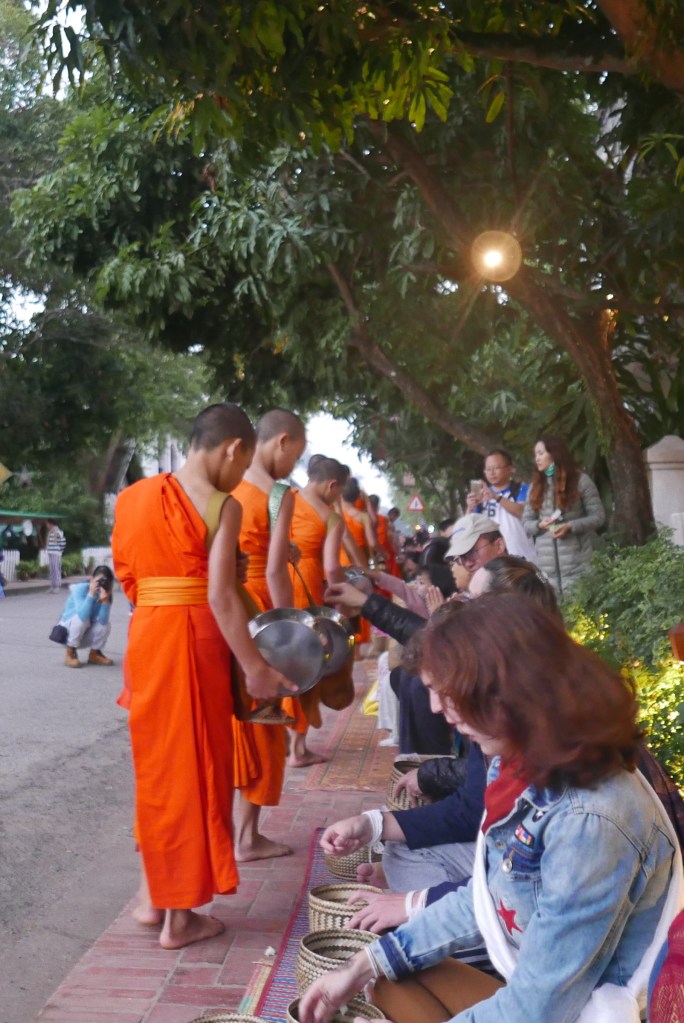
The monks’ alms bowls hang from their shoulders by a strap and they carry them in front as they walk through the streets. It’s a striking image as you see the procession of orange robed monks silently making their way through the quiet, pre-dawn streets. As they pass by, you give your offering to them by putting it in their bowl. We had sticky rice prepared by our hotel and the custom is to scoop it from your basket into their bowl as they walk by.

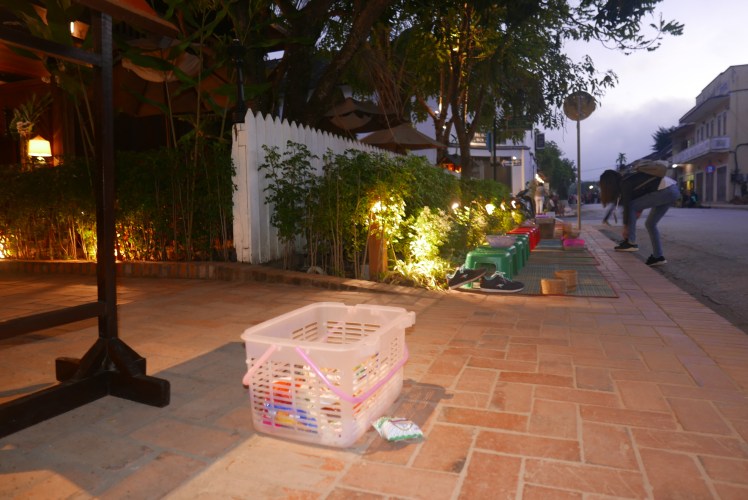
There is no speaking, as the monks are in meditation as they are walk. If you are an alms giver, like we were, you remove your shoes and sit quietly or kneel respectfully as the monks go by. The picture below was taken before the procession started, so we still had our shoes on. The baskets in front of us are holding the sticky rice.

The idea behind the ritual is that it helps the monks by giving them food and it helps the alms givers by helping them “make merit”, or receive spiritual redemption. Monks traditionally have only one daily meal and the food donations are primarily sticky rice and sweet treats. There are empty baskets set throughout the streets and once monks believe they have enough food for the day, they start to add food to those baskets. Children in need can come take whatever they want from the baskets back to their families.
There were a few things that really struck me as we participated in this ancient ritual. The first was how young some of the monks were. A few of them looked hardly older than Jack’s age. I couldn’t get the young monks out of my head, wondering how they came to be monks and how often they get to see their families, if at all. I did some research online afterward and from what I can tell, it seems like their service is voluntary and that it’s also not always indefinite. Some young monks enter the monastery for a certain period of service and not for a lifetime. It is also a custom for them to enter a monastery after a parent or grandparent has passed away for a certain period of time following the passing.
Also, as I sat there that morning, I realized it was less than a week ago that I was explaining to Jack that he was going to see some people that looked a little different in Southeast Asia. I told him they’d be wearing orange robes and would have shaved heads and then tried to explain the concept of a monk as best I could. I remember thinking at that time, the last thing I wanted was to be in an airport or in the street and have him see a monk and point or make a big deal. Not that I assumed the worst, but I think every parent has probably had at least a few of those experiences! It blew me away how quickly he adapted and it was just no big deal…just some monks from the local monasteries collecting food in the morning. He understood it, he got it and he didn’t think twice. Oh if only every adult could be so accepting of others and open to new cultures and ways of thinking! I think the world would be a much different place…

 The Detour Diary